Historic Renovation Rules in Heritage Hills and Mesta Park
September 3, 2026
September 3, 2026
Heritage Hills homes sold for a median of $840,000 over the past 12 months, a jump of 45 percent from the year before. That number will catch the eye of anyone comparing neighborhoods across Oklahoma City, where the metro-wide median has been sitting closer to the high $200,000s. But a single eye-catching median in a neighborhood with only a few dozen sales a year says less about appreciation than it does about which handful of grand old houses happened to trade hands. What the number doesn't tell you is what actually determines whether that house stays the way you bought it, or the way you want it.
That answer isn't in the listing. It's in a city ordinance, a Certificate of Appropriateness, and a volunteer committee that reviews porch railings.
Heritage Hills and Mesta Park sit a few blocks apart in central Oklahoma City, and buyers often treat them as a single package deal. They aren't. Each has its own regulatory history, and the gap between the two tells you something about how deep the oversight runs.
| Neighborhood | National Register listing | Local Historic Preservation zoning | Typical architecture |
|---|---|---|---|
| Heritage Hills | 1979 | 1969, Oklahoma City's first local historic district | Neoclassical, Tudor Revival, high-style mansions built by oil-era civic leaders |
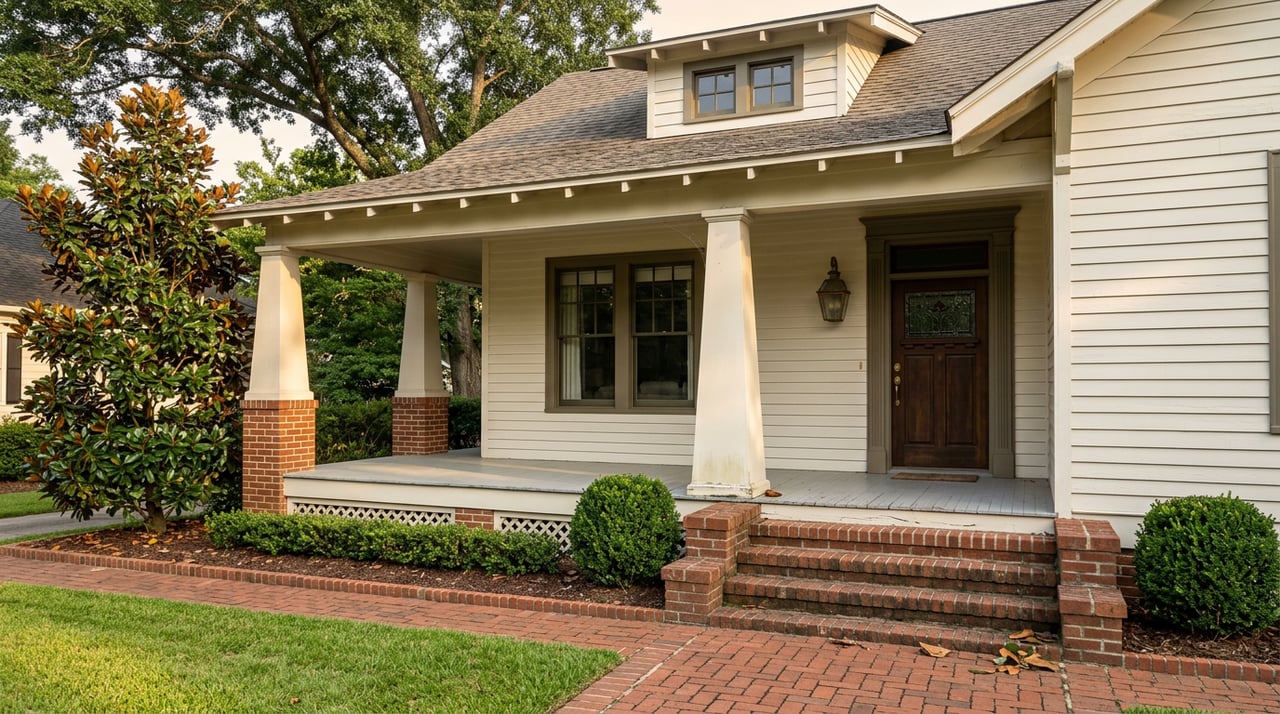
| Mesta Park | 1983 | 1994 | Craftsman, Prairie, Colonial Revival, and Foursquare homes built largely between 1906 and 1930 |
Notice that Mesta Park carried its National Register listing for eleven years before the city gave it binding local zoning. Heritage Hills went the other direction, earning local protection first, in a fight residents won after developers threatened to clear the old mansions for office towers and parking lots. That history still shapes how each district feels: Heritage Hills reads as more architecturally varied, Mesta Park as more visually cohesive, with its Craftsman and Prairie bungalows sitting closer together under a shared design vocabulary.
Either way, the effect for a buyer today is the same. Once a house sits inside these boundaries, exterior changes go through Oklahoma City's Historic Preservation process before they go through a contractor.
The mechanism is called a Certificate of Appropriateness, and it's required for changes to buildings, demolitions, and new construction inside a Historic Preservation zone. In Heritage Hills, the nonprofit Historical Preservation, Inc. puts it plainly: owners must request and receive a CA from the HP Commission before any modification or addition to any exterior feature of a home. That commission is Mayor-appointed. A 2003 update to the ordinance added something else worth knowing about: volunteer Neighborhood Design Review committees, made up of residents with deep experience in HP rules, who advise homeowners and make monthly recommendations. They don't have final say. Only the Commission decides what gets approved.
What actually draws scrutiny is fairly consistent across both neighborhoods. Front-facing changes get the closest look: porches, dormers, roof adjustments, and window replacements visible from the street. Additions are generally expected to be compatible with the original house and placed at the rear or on a less visible elevation rather than announced from the curb. Garages carry their own risk. Moving one to the front of a lot, or otherwise changing a home's historic orientation, tends to face stronger pushback than a rear addition would. And when it comes to original windows, the city's preference is retain and repair first. If you're set on replacement, expect the process to ask for drawings and product specifications before you swap anything out.
The practical cost of all this isn't the paperwork. It's the time. Staff at the Planning Department first decide whether a project can be handled administratively or needs to go in front of the Commission. Administrative approvals can move in days to a few weeks. Commission cases run on a monthly meeting schedule, which means realistic timelines stretch to several weeks or a few months depending on complexity and submittal deadlines.
Stack those pieces together and a renovation that feels simple on paper, say, replacing a porch railing before listing a house for sale, can take a full season to clear if it lands on a commission-review track instead of an administrative one. If you're timing a project around a move, a listing date, or simply wanting to enjoy a finished porch before winter, that calendar deserves a place in your planning from the start, not a surprise partway through.
None of this exists in a vacuum. Both neighborhoods carry the kind of texture that a design review process is built to protect. Perle Mesta Park anchors Mesta Park daily life, a full block of mature landscaping, play structures, a gazebo, and a sand volleyball court that residents have used since the park was created in 1975. The neighborhood association hosts Mesta Festa and a Holiday Home Tour each year. Heritage Hills runs its own annual Historic Homes and Gardens Tour, and the district still holds the Overholser Mansion and the Hales Mansion among its architectural landmarks. Mesta Park's own standout is the Milton Scott House, built around 1907, the only Greek Revival residence in the neighborhood.
Buyers drawn to these streets are usually drawn to exactly this: a sense of place that a new subdivision can't manufacture. The review process is the tool the city and residents use to keep that intact. Whether that trade-off feels like protection or friction depends entirely on what you're planning to do with the house.
A few things worth confirming before you get emotionally attached to a specific address:
Does historic designation affect what I can do inside the house? No. Local historic district review in Oklahoma City is built around exterior changes visible from the public right-of-way, along with demolition and new construction. Interior remodeling generally falls outside that review.
Can I paint my house any color I want? It depends on the district, and the honest answer is to check current guidelines directly rather than assume. Rules on paint color aren't uniform across every Oklahoma City historic district, so this is one to confirm before you buy paint or plan a listing refresh.
Will this process actually hurt my home's value? Research on designated historic districts generally shows they help maintain or increase property values over time by protecting the character that made the neighborhood desirable in the first place. The tradeoff is patience during any exterior project, not a ceiling on what the house is worth.
A house in Heritage Hills or Mesta Park comes with more moving parts than a standard resale, and the time to understand them is before you write an offer, not after you've fallen for the porch. If you're weighing one of these historic addresses against a newer build elsewhere in the metro, or you're getting ready to list a historic home and want a strategy that accounts for the approval calendar, Oberfield Real Estate Team can walk you through what a specific address actually allows. Get a free home valuation and a straight answer about what you're taking on.
This article is general information, not legal, tax or financial advice. Consult a qualified professional about your situation.
Stay up to date on the latest real estate trends.
Experience a real estate partnership built on trust, expertise, and genuine care. We bring a lifelong understanding of what “home” truly means to every client and every decision. Making the difference between "For Sale" and "Sold".